Daily Rhythm
There seems to be a debate as to whether the best of the day belongs to early risers or night owls. I think the premise itself is flawed, because there’s clearly other variables involved. I think, for example, that being an early riser in a culture of night owls is ideal. It’s the situation I’ve found myself in since moving here to Georgia.
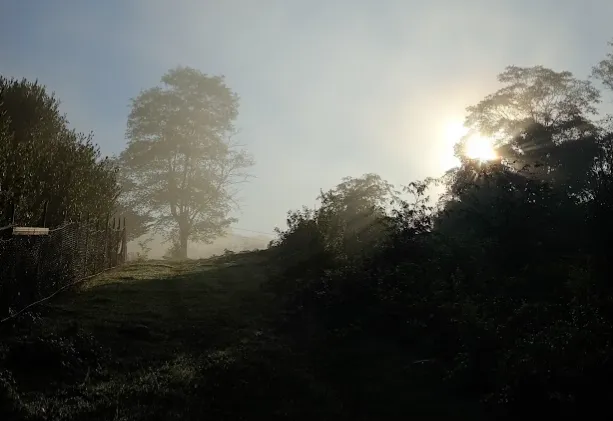
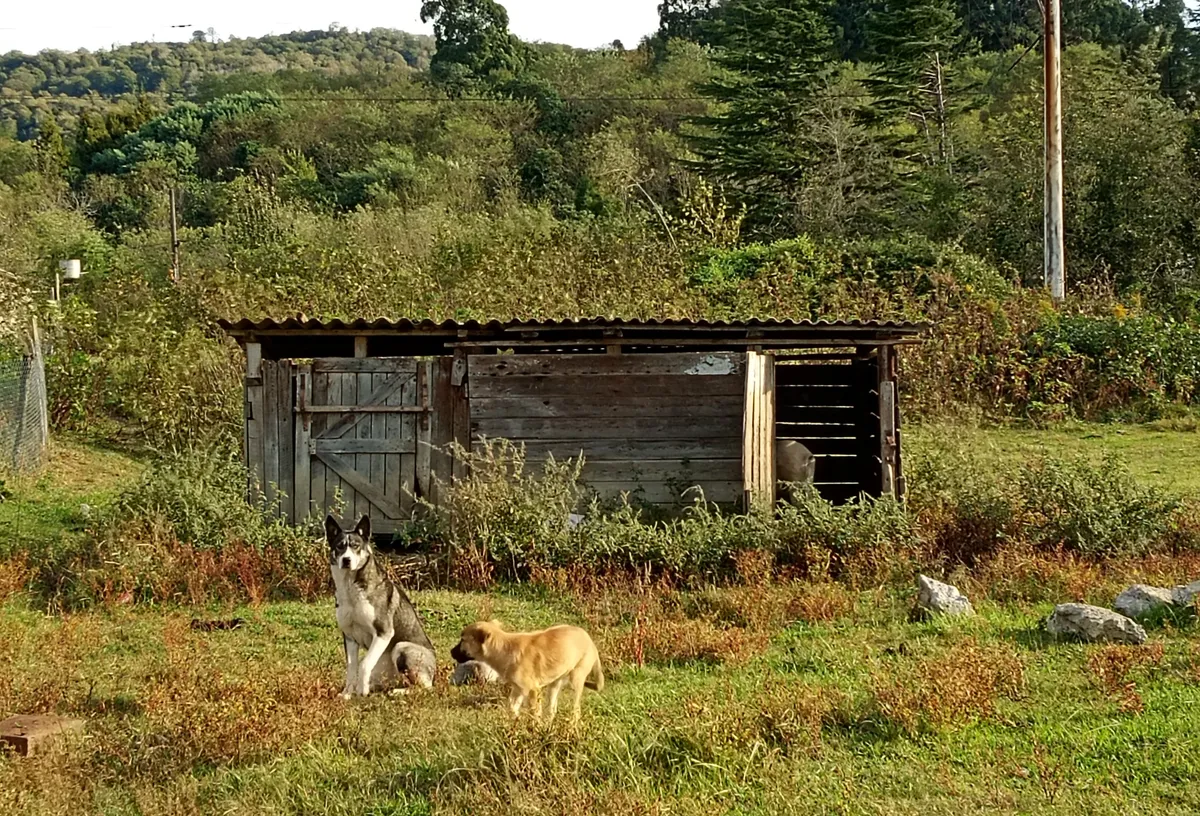
Most Georgians are dead asleep until 9am; when I go for walks after waking up, not even the dogs disturb me. But more fundamentally, everyone I know and love back home is asleep too. Even if I wanted to talk, there’s no one to pick up the phone. Phone is silent, brain is silent, air is silent.
When I first got here to Georgia, I impulsively decided to leave behind my precious noise-canceling headphones, just to see what would happen. Those who knew me in college know that those headphones were on my person at basically all times senior year. A constant IV-drip of music was the way I self-medicated through two senior projects and three part time jobs.
And then I lost my phone, and for various reasons, I couldn’t get my hands on another for almost three weeks. I was left alone with myself, my room, the five books I brought with me, and a village of people who don’t speak English. The brain starts to get desperate, staring down the barrel of life without an internet connection. One week in, I traveled an hour into a nearby city just to buy a new novel to read. I finished it in 8 hours of uninterrupted reading. I haven’t pulled something like that since I was a kid.
Tech has obviously reentered my life (this blog post, for example), but as cliché as it sounds, village silence seems to have changed my brain. I can focus now for hours without getting that unbearable brain itch I’m sure most other gen z kids are also familiar with. After three months of no music, I caved and bought headphones, but I can’t use them for longer than maybe half an hour without starting to feel a little overstimulated. Silence and one-task focus have become the default.
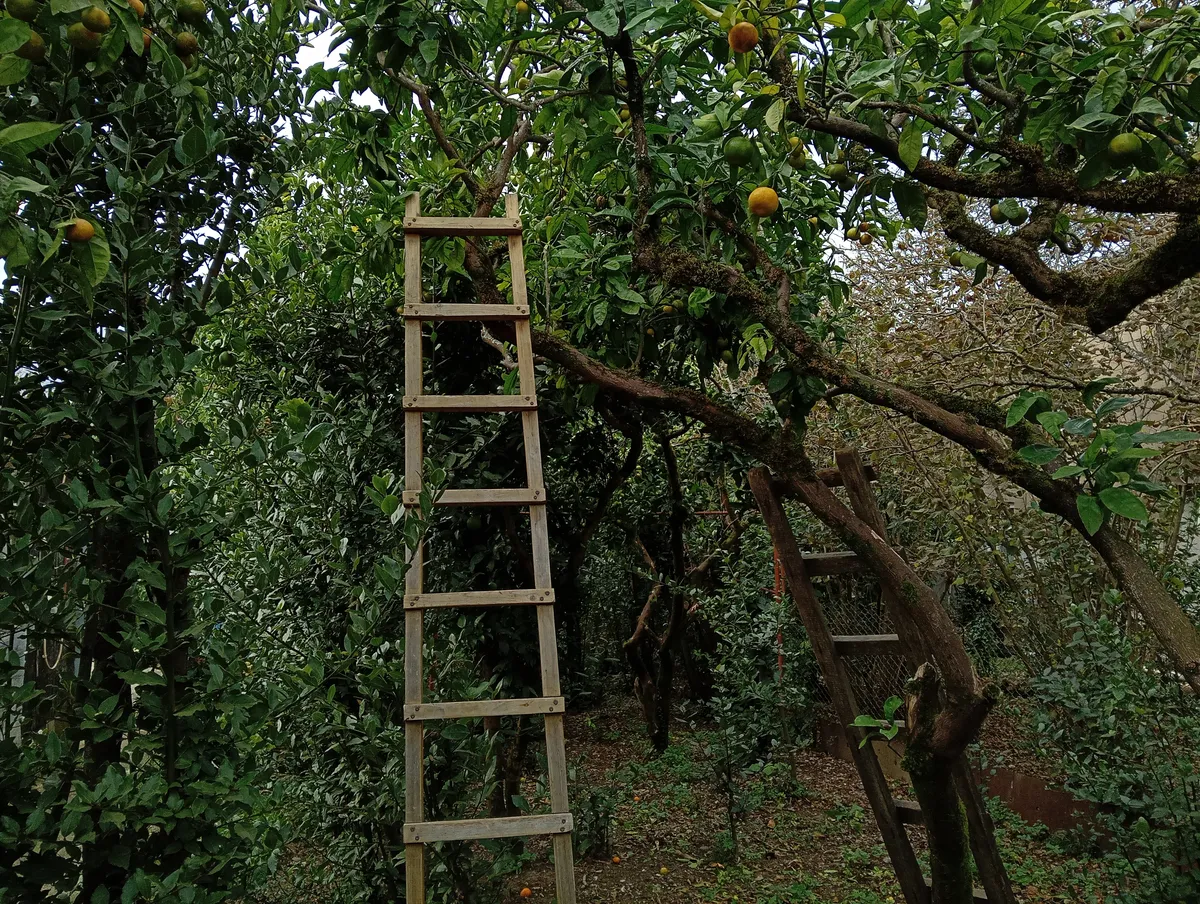
And so most days find me entering flow state with an ease that’s new to me. When I’m not teaching, the days pass in units of hours spent working in orchards, helping with the autumn honey harvest, studying Georgian, cooking with neighbors, and practicing on a folk instrument called the Panduri.
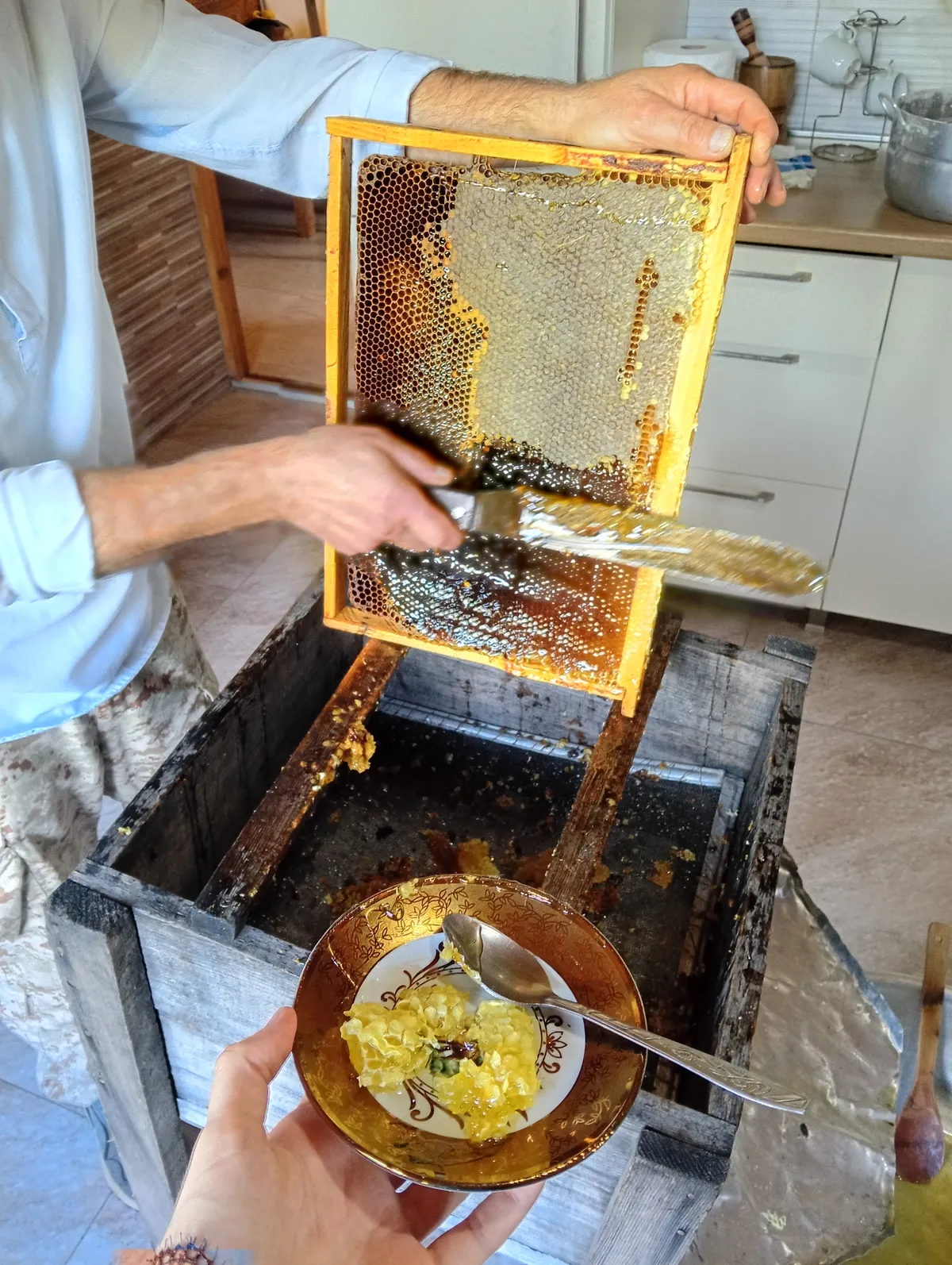
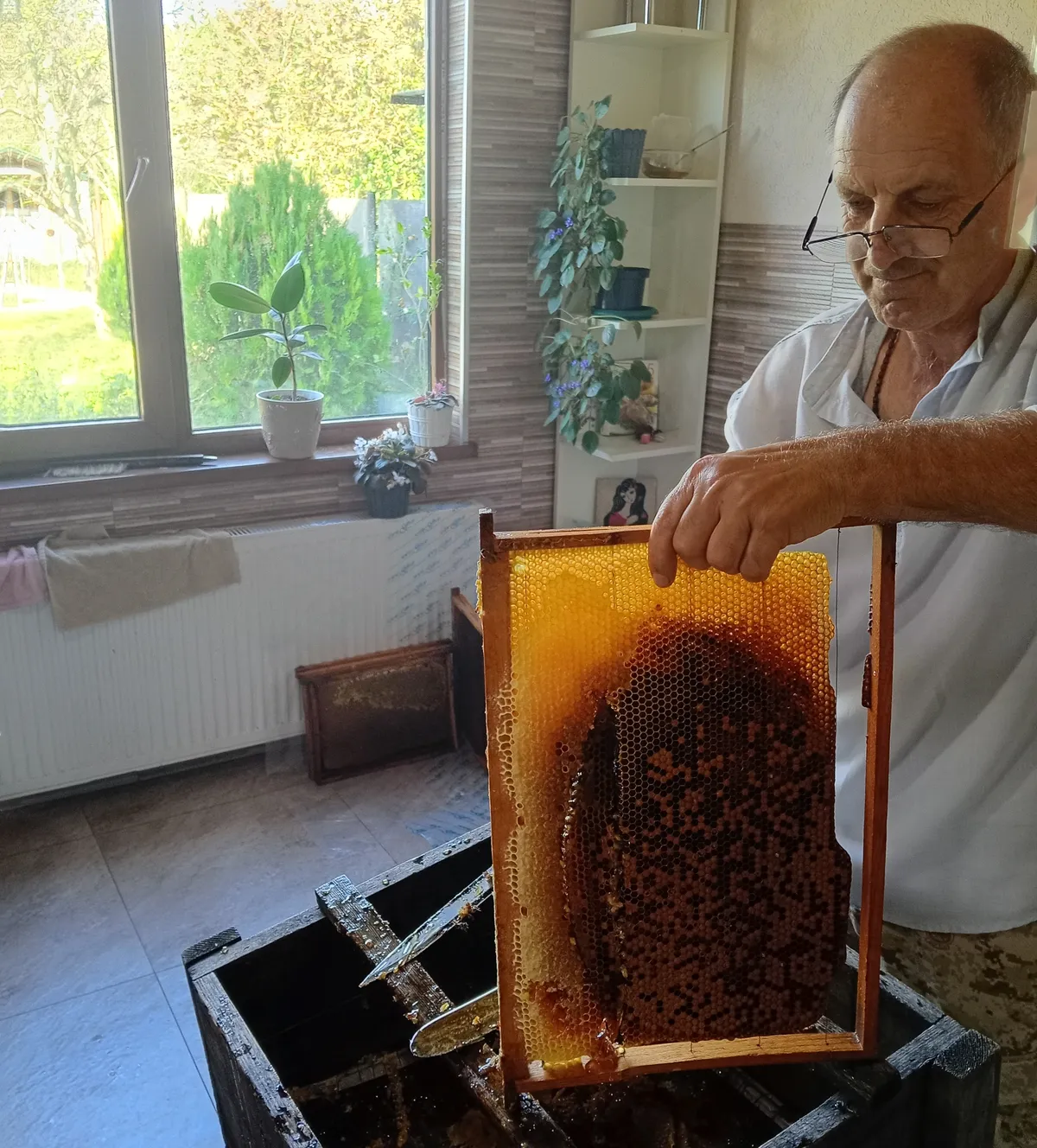
Something must have changed, because last week, Zaza began asking for my help. Turns out he’s a great teacher; after a morning spent selecting hive frames ripe with honey, we took them inside, where he showed me how to extract the honey without damaging the delicate cells built by the bees (the hexagon shaped things). Wielding what looked like a giant palette knife, he cut into each frame with the proprioception of an artist, then let me try my hand at it. We snacked on honey throughout the whole process, straight from the comb.
When I first got here, I felt this frantic energy to get work done as fast as possible. Since I’m still in training, and will be for the next eight months, “work” means learning the language and integrating into village life. I spent the first month cramming as much Georgian grammar as possible, forcing myself to spend most evenings visiting new families, following a rigid schedule—the burn out was bad. Then I lost my phone, and the deafening silence forced me to reflect.
I’ve spent most of my life thinking that “productivity” meant brute-forcing your way and your willpower through whatever challenge life set before you, with something to show for it on the other end. But not Kheta. Georgian and Mingrelian language, customs, culture—each one too colossal, insurmountable even, to brute-force into the predictive timetable of productivity that I wanted.
There’s another way of viewing time and labor, one that the villagers here live by, though for them, I don’t think it’s conscious. It’s this: do your labor, bit by bit, saving enough energy for the end of the day to be able to enjoy the presence of the people around you, maybe even singing with them a little. Why worry about what tomorrow brings? If you’ve managed to make a little progress each day, time and consistency will take care of the rest.
With uncanny prescience, a friend of mine (a coworker in Africa) recently sent me this passage from the Tao Te Ching:
overcomes the hardest substances.
That which offers no resistance,
can enter where there is no space.
Few in the world can comprehend
the teaching without words,
or understand the value
of non-action.