MINGRELIANS (start here)
In Georgian, a common word construction is to sandwich a name or attribute between “Sa-” and “-O,” effectively meaning “place of [original word].” Samegrelo means, therefore, “place of the Megreli (people).” Or, as it’s more often latinized, the Mingrelian people.
Samegrelo is a strange place, and Mingrelians are strange Georgians. Samegrelo, stretching along the Black Sea coast, has been the site of seafaring Greek colonization going back into the Bronze Age. As a Greek colony, this region was known as Colchis, the place where Jason and the Argonauts retrieved the Golden Fleece, if legends are to be believed. The climate here is uniquely semi-subtropical: think palm trees, storms, and exotic fruits harvested late into autumn, but no coconuts, white sand beaches, or giant snakes. The forests are deciduous. There’s even some pine trees.
Mingrelians are different from other Georgians. They proudly speak their own language, and unlike Georgia’s other regional ethnic languages, Mingrelian isn’t in any danger of dying out soon, even among the younger generations. They have a distinct look as well. While most Georgians are darker complexed, many Mingrelians have clear, almost piercing eyes of green or hazel, and light to medium complexions, while still retaining Georgian facial structure. I’m not sure if any anthropological haplogroup testing has been done in the region, but I’d bet a lot of these Mingrelian families descend from some mix of ancient Hellenic colonizer and native Georgian. Or perhaps the distinct look is due to Slavic influence. Everyone here seems to have a great-grandmother from Moscow.
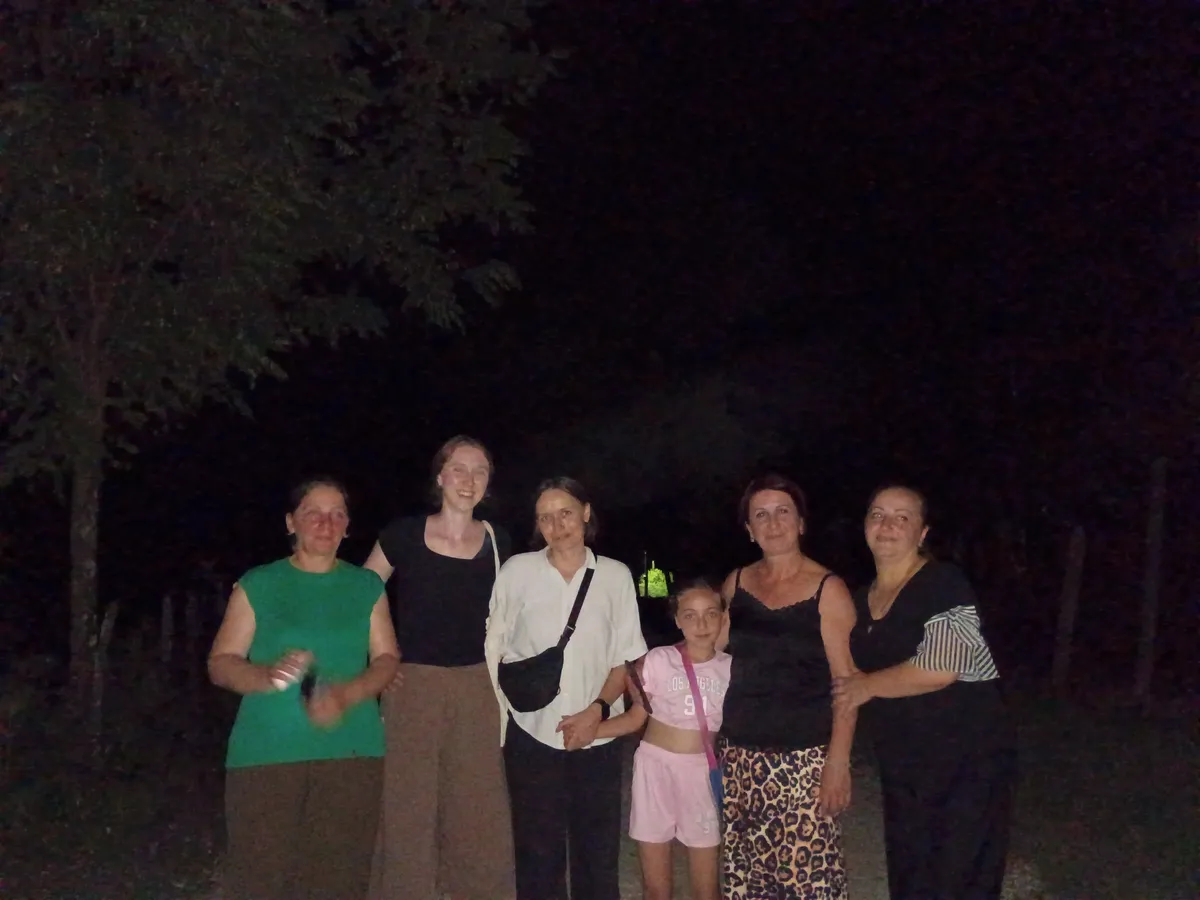
“GOGO [semi-slang, literally means girl, but more like dude], COME HERE.” my host mom, Inga, screams from across the house. My first month here, I’d respond per instinct: putting down whatever I’m working on and running after her, worried it’s some sort of emergency (it’s not).
But by month two, Mingrelian instincts are slowly taking over. “RAAAAAAAAAAAA [what?]” I shout back at her, emphasis on holding the “-AAAAA” for at least three seconds to vent annoyance, but avoiding the disrespectful rising intonation at the end (rising intonation: one clue a Mingrelian is actually angry).
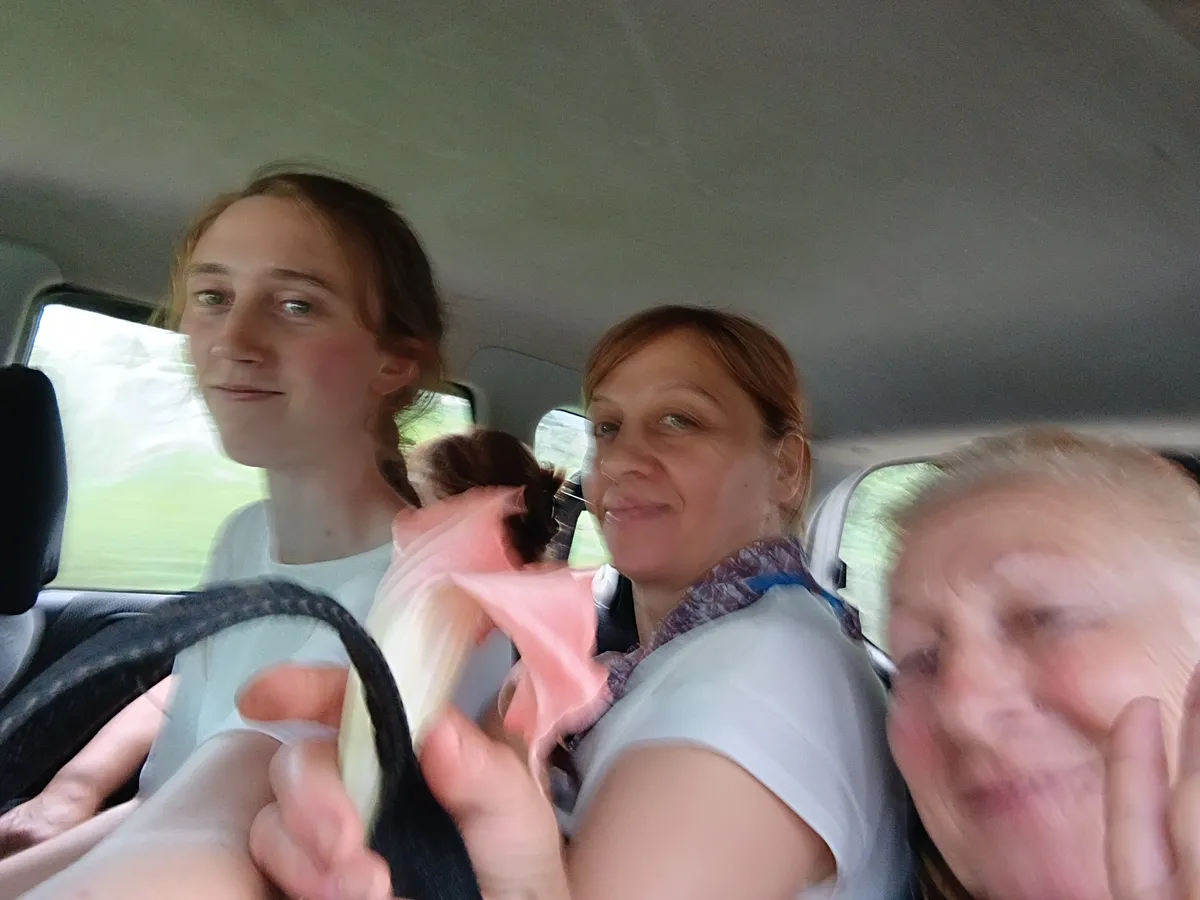
But these anecdotes don’t give quite the right impression. It isn’t that Mingrelians are fundamentally annoyed, or mad, or rude all the time, but rather that there’s more emotions packed into their interactions, both good and bad. What, for example, are a bus load of Mingrelians to do on a four hour bus ride? Sing karaoke and dance in the aisle, of course. That was a fun trip without headphones.
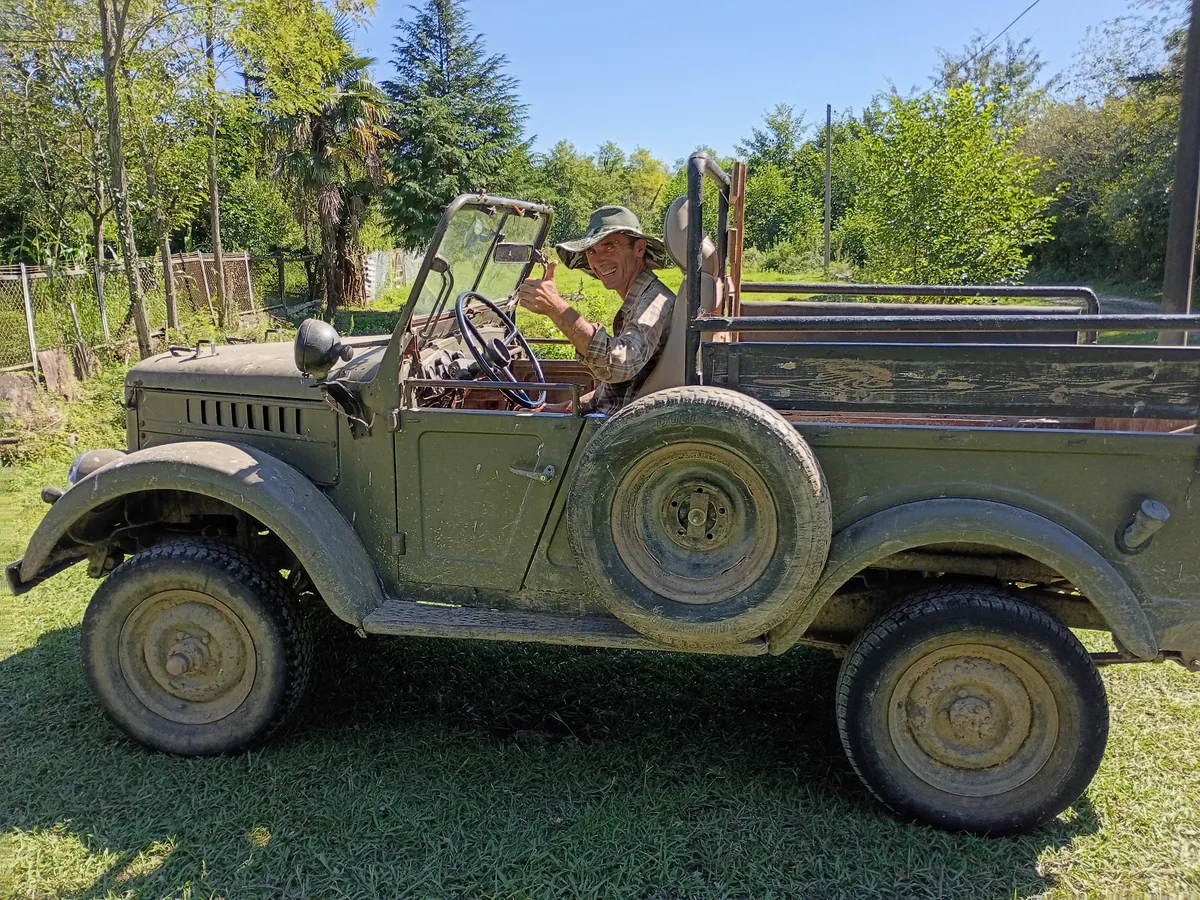
My otherwise serious coworker Coltrane has managed to adopt a Mingrelian temperament of communication. “Gogo… where have you been?” an older woman asks; he answers for me, “dancing with the devils in hell,” and she falls back in her chair and covers her face with a napkin to choke back hysteria.
I’m making my own progress as well. At dinner the other night, the cats kept jumping up on the table to eat off our plates with unusual persistence. “Inga, the cats in this house are our [slave drivers, but an archaic, highfalutin word for it],” I remarked, as Inga catapulted a kitten across the dining room for the fourth time. She burst into laughter that could better be described as guffawing, the kind of reaction I hope for when I spend my free time learning such vocabulary.
At this point I’m sure some of you are wondering how I like being around Mingrelians all the time. And it’s true, if you had told me before that these would be my people, I would have had concerns over the long term sustainability of my mental tranquility. Especially since, having spent time living with other kinds of Georgians in other regions, I know that alternatives exist. But to my surprise, living with them has had the opposite effect. Let me explain.
Because their communication leaves absolutely nothing implicit, I’ve spent no time wondering over the subtext of any interaction, be it with an elder, a teenager, a man or a woman. There’s something strangely cathartic about the free venting of emotion in daily discourse. Why, after all, might the expression of frustration or dislike be considered rude? Why shouldn’t one be free to laugh and exclaim “arAAA, [no, I hate it!]” when one dislikes one of the foods being offered, without giving offense? From where comes the expectation that the social order will be sinned against unless one demurely answers with slight regret “oh, that’s alright, but thank you!”? In Samegrelo, respect is not shown through the dutiful repression of any socially intrusive emotion, even towards one’s superiors. It seems to be shown, as far as I’ve begun to tell, in other ways: earnestness, presence, the Supra.
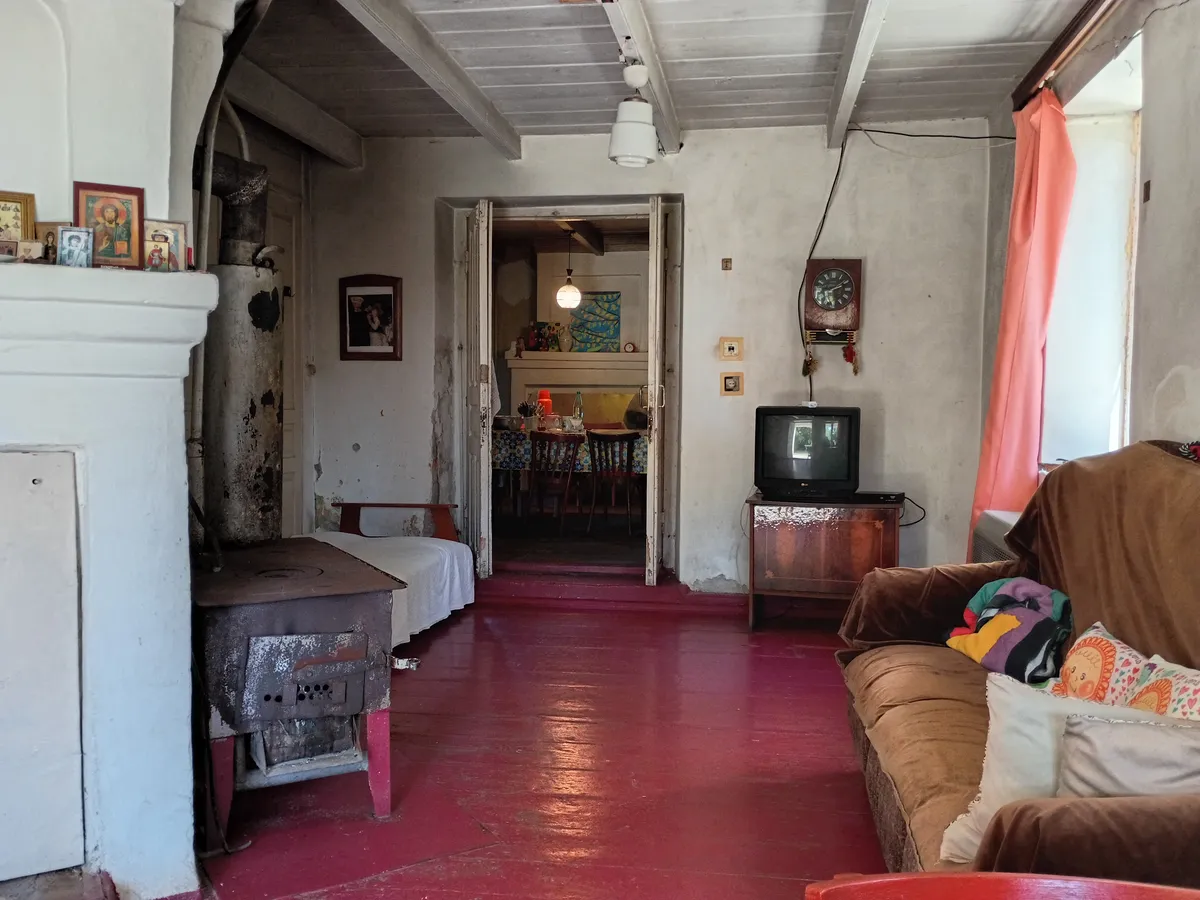
Anyway, yesterday several of my coworkers from southern Georgia arrived for a visit in Samegrelo, and to celebrate their arrival, we gathered with the Kirias for an intimate supra. During this supra, K’uchu made a toast to my courage as a young traveler, and his admiration for it. I was silent for a minute while processing his words, which were moving from someone as old and taciturn as he.
On the topic of true, versus faux, respect: it’s disrespectful here to politely evade a compliment honestly given; it’s likewise dishonorable to both you and your host to attempt to downplay a toast made in your honor. With Lilia translating, I responded that the courage of the traveler (მოგზაური, mo-gza-uri: a rich word in Georgian, something like “wayfarer” in English) gains its meaning, its directionality, from the hospitality of the ones who receive them. I thanked K’uchu and Lilia for all that they had done for me, and admitted that I considered them my Georgian family. K’uchu, usually stone faced, smiled from his eyes. It’s deeply satisfying, the moment you know you’ve succeeded in communicating to someone how much they mean to you. Moments like these, I’ve learned, are the true currency of respect within all Georgian cultures.
In spite of, or maybe because of, their rowdiness, ხმაურიანი (khma-uri-ani: noisiness), and passion, Mingrelians have kept my heart brimming full since I first came to Samegrelo. I’ve realized there’s something profound to learn here, something to do with the nature of human relationships, of love and respect, but I can’t quite put my finger on it, which is partially why I decided to start writing about all this in the first place. With any luck, my thoughts might one day crystalize into something noteworthy, but if not, that’s okay too. Because ultimately, the process itself is the goal.